
A great artificial lawn is more than a roll of green material. It is a carefully prepared outdoor surface designed around your yard’s drainage, use, sun exposure, and edges. When those pieces work together, turf can turn a patchy, high-maintenance yard into a clean, usable space through Texas heat, rain, and everyday life.
For homeowners, the biggest difference between a surface that looks good on day one and one that still feels right years later usually lies below the blades. Proper excavation, a stable base, deliberate drainage, and precise finishing are what make an installation perform.
Start with the yard, not the turf sample
Before choosing a product, look at what the area needs to do. A low-traffic front yard, a dog run, a putting area, and a family backyard call for different turf characteristics and underlayment choices.
Ask a few practical questions first:
- How much direct sun does the area receive, particularly in the afternoon?
- Does water collect near the home, patio, fence, or low points?
- Will children, pets, or furniture use the surface regularly?
- Are there trees that drop leaves, acorns, or small branches?
- Does the project connect to a pool, hardscape, garden bed, or drainage system?
These answers shape the layout, drainage plan, edging, and turf selection. They also prevent the common mistake of treating artificial grass as a cosmetic layer rather than a complete landscape surface.
The artificial turf installation process, step by step
Every property is different, but a thoughtful residential installation generally follows the same sequence.
Site assessment and layout
The installation begins by confirming the project area, existing elevations, access points, and intended drainage paths. This is the time to flag irrigation heads, utility lines, tree roots, and transitions to concrete, pavers, or landscape beds.
The layout should feel intentional from the house and the yard. Curves, corners, and hardscape joints are planned before material is cut.
Remove existing turf and excavate
Existing sod, roots, and organic material are removed so the new surface does not settle unevenly. The excavation leaves room for a compacted foundation and allows the completed turf to meet patios, walkways, and borders at the right elevation.
This is also when a contractor should address soft spots, poor grading, or areas that repeatedly hold water. Covering those problems does not solve them.
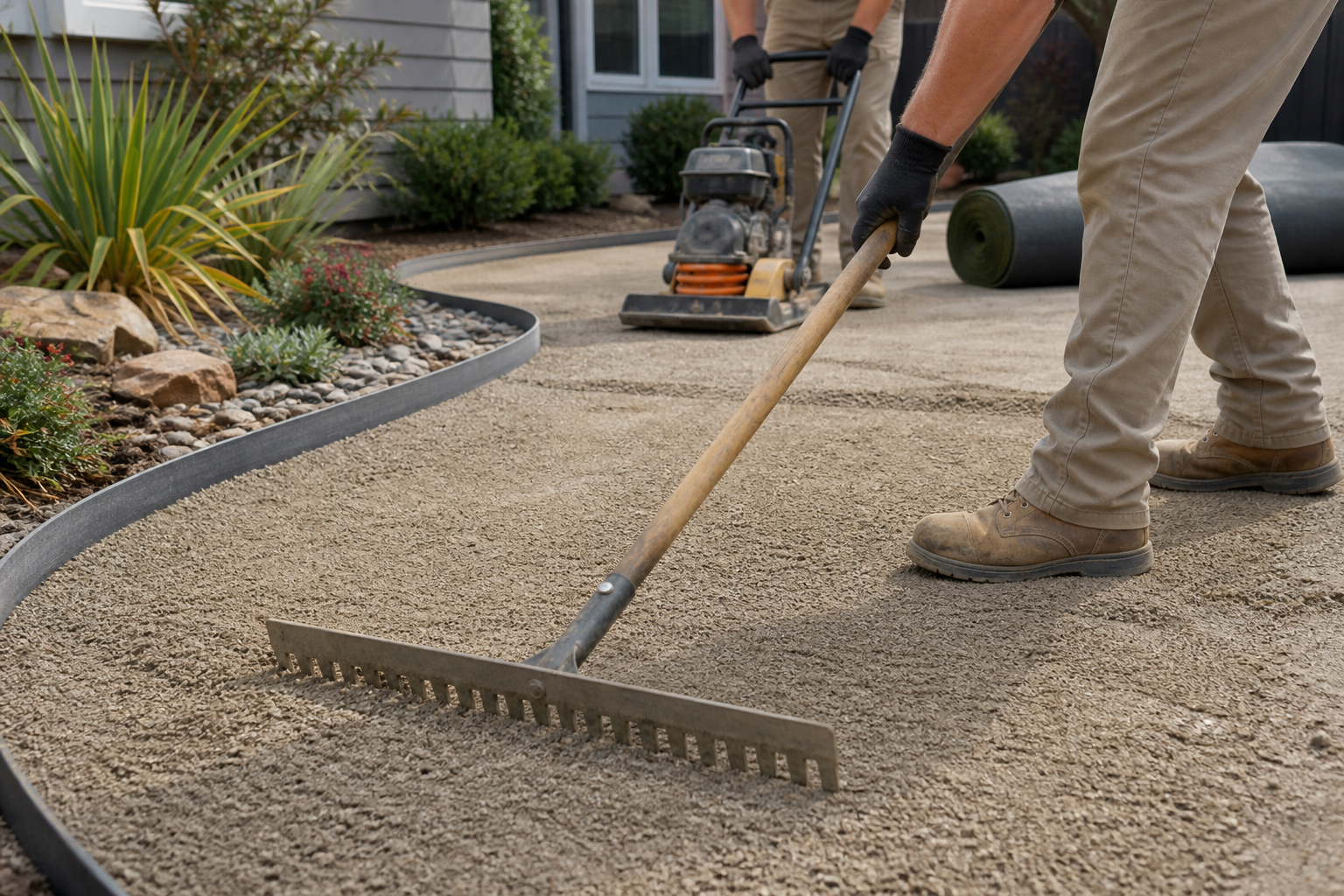
Build and compact the base
Crushed aggregate is installed in controlled layers, graded, and compacted into a firm, even surface. The base supports the turf, distributes use, and helps water move through the system.
For Texas yards with expansive clay soil, the base and edge restraint deserve extra attention. Seasonal soil movement and sudden rain can expose shortcuts quickly.
Plan drainage before the turf goes down
Modern artificial turf is permeable, but water still needs a destination. Grading, a permeable base, drainage channels, or a connection to an existing system may be needed to move water away from structures and usable areas.
If a yard already floods or drains slowly, treat it as a drainage project first and a turf project second.
Install edging and roll out the turf
Edge restraint gives the installation a crisp outline and helps keep the perimeter stable. The turf is positioned, allowed to relax, and aligned so the blade direction looks consistent throughout the area.
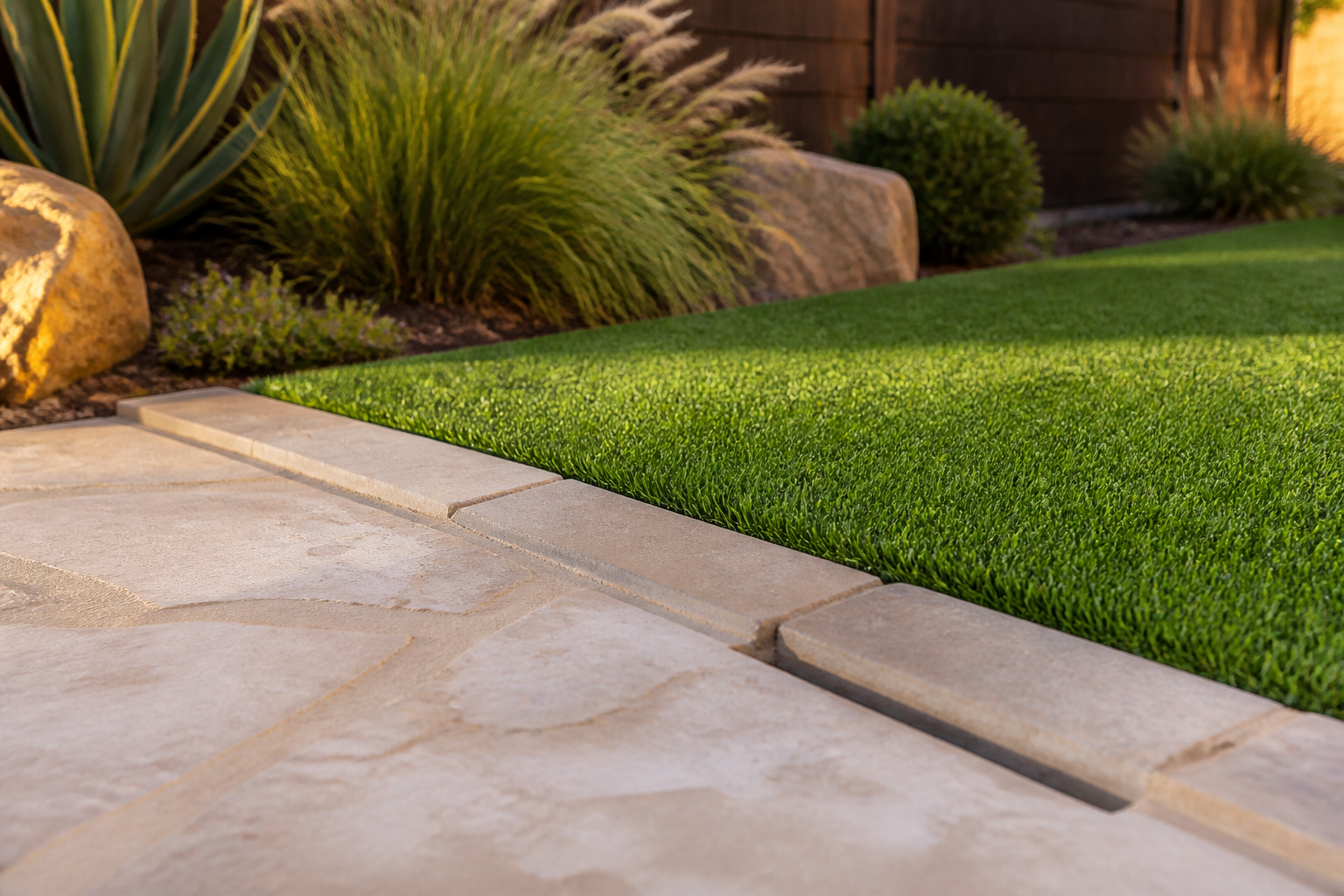
Careful trimming around curves, beds, drains, and hardscape prevents wavy lines, visible gaps, and awkward transitions.
Seam, secure, and finish
Where sections meet, seams are joined on a stable surface and checked from the normal viewing angle. The installer secures the perimeter, adds the specified infill, and power-brushes the fibers so they stand naturally.
A final walk-through should cover transitions, loose edges, water flow, and the overall appearance of the lawn.
Choosing the right turf for a Texas home
There is no single “best” artificial turf. The right system depends on the space. Decorative lawns often prioritize a natural blend of blade shapes and tones. Active family yards need resilience under foot traffic. Pet areas need dependable drainage and easy cleaning, while putting greens require a purpose-built surface.
- Pile height and densityInfluence softness, realism, and performance under regular use.
- Backing and permeabilityAffect durability and how effectively water moves through the surface.
- Infill systemSupports the fibers, improves stability, and can be tailored for pets or play.
- Heat considerationsShade, thoughtful landscape design, and occasional rinsing can improve comfort in direct Texas sun.
- Warranty and installation scopeConfirm coverage for the product as well as the base, drainage, seams, and edges.
Common shortcuts to avoid
The lowest quote can become the most expensive installation if it leaves out the work that makes turf last. Be cautious when a proposal is vague about excavation, base material, compaction, drainage, seaming, or edge restraint.
- Turf placed directly over grass, soil, or an uneven surface without proper preparation
- No clear explanation of how water will drain away from the home
- A proposal that does not specify base depth or compaction
- Highly visible seams installed without considering blade direction
- No detail about how edges and transitions will be secured
Quality work is not simply about making a lawn look finished on installation day. It is about building a stable system that keeps looking finished.
Easy care after installation
Artificial turf removes mowing, fertilizing, and routine irrigation from your lawn-care list, but it is not completely maintenance-free. Remove leaves and debris regularly, rinse dust or pollen as needed, and brush high-traffic areas occasionally to lift the fibers.
For pet owners, regular waste removal and occasional rinsing are essential. If odor becomes a concern, use a turf-safe enzyme cleaner according to its directions and make sure the drainage system is working as intended.